



Reflecting on the Labour Party Conference 2026
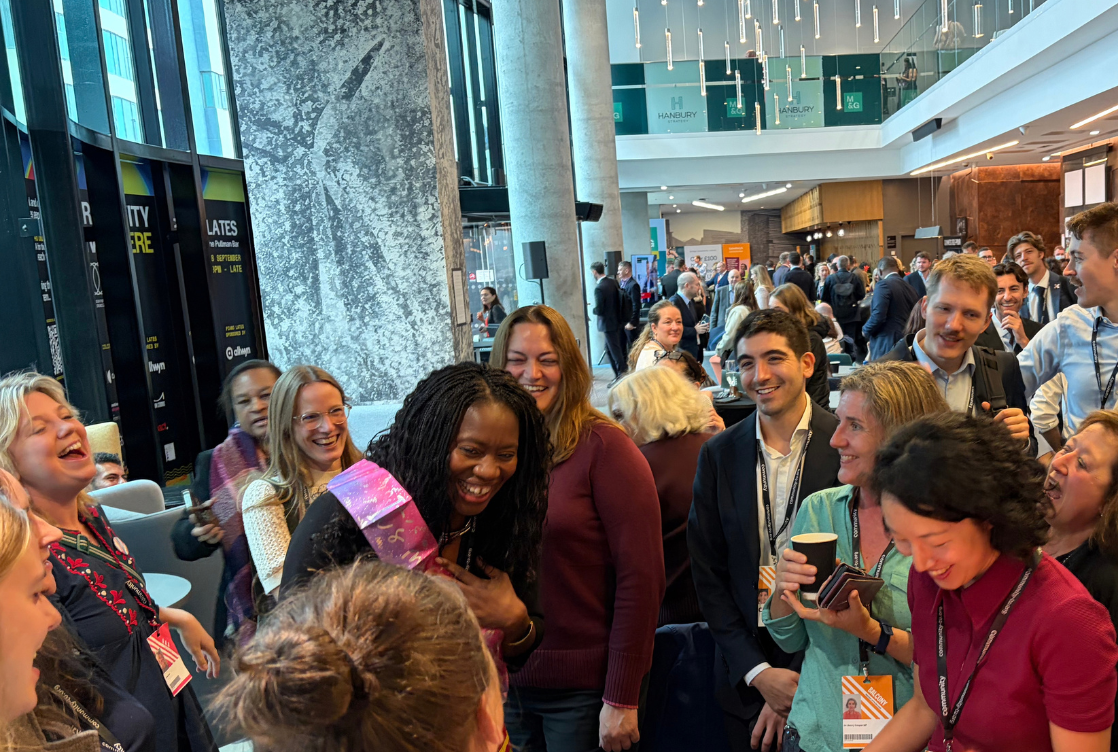
Last week, the Labour Party Conference returned to Liverpool, the hometown of Hope for the Future’s Chief Executive, Laura D’Henin. Laura was joined by our Director of Policy and Engagement, Joel Silver, and Political Lead, Alfie Prothero, for several packed days of conversations with politicians, partners and others from across the climate, nature and democracy sectors.
We came away optimistic, but with a renewed fire in our bellies to keep pushing for communities to be heard. With around 80% of people concerned about climate change, its relative absence from the main political narrative was noticeable, and only strengthened our determination to ensure people have a meaningful voice in shaping what comes next.
 Written by Laura D'Henin-Ivers,
Climate and nature: quieter on the main stage, buzzing around the edges
Climate and nature did not feature as prominently in the overarching political story of the Conference as we might have hoped. The biggest announcements from the Prime Minister focused elsewhere: a new national care service, greater public control of water and housing, the UK’s relationship with Europe and electoral reform.
However, while climate and nature struggled for limelight in the Prime Minister's conference speech, they were impossible to ignore elsewhere:
Energy Security and Net Zero Secretary Miatta Fahnbulleh gave an impassioned speech presenting home-grown renewables as the answer to energy security, affordability and economic prosperity in communities across the country.
Foreign Secretary Ed Miliband drew an explicit connection between the climate crisis, foreign affairs and national security.
Environment Secretary Angela Eagle made clear her belief that farming and nature are not competing issues, and that nature-friendly solutions are essential to food security and the prosperity of farming communities.
It was abundantly clear that Andy Burnham's Cabinet contains dedicated, vocal champions on the climate and nature crisis, working within his wider political vision. This theme continued with other politicians too - from Mayors touting the palpable health and social benefits of reducing pollution in our biggest cities, to members of the Environmental Audit Committee presenting Labour vision for rural communities. Across dozens of panels, speeches and conversations, a theme emerged: this summer has brought home to many the devastating reality of the climate crisis in the UK, and ambitious, progressive policy solutions have real traction within the Labour Party, from members to ministers.
On energy, the £15 billion Warm Homes Plan was also prominent. While the funding itself was not new, a significant development was the decision to devolve greater responsibility for the programme, giving Mayoral and Local Authorities more decision-making and spending power over how it is delivered. For Hope for the Future, that shift is particularly interesting: bringing decisions closer to communities creates new opportunities for local people to influence how the transition happens in the places where they live.
But there was still a sense of an elephant in the room. At a time when communities are already experiencing extreme heat, flooding, rising costs and pressures on the places they live, climate and nature did not yet feel fully woven into the Government’s central political narrative about the country it wants to build. Adaptation and resilience is no longer a conversation about preparing for a distant future; it is about how we protect people, places and livelihoods now. Yet preparing communities for those impacts barely featured in the Government's central narrative or, indeed, across much of the wider Conference programme.
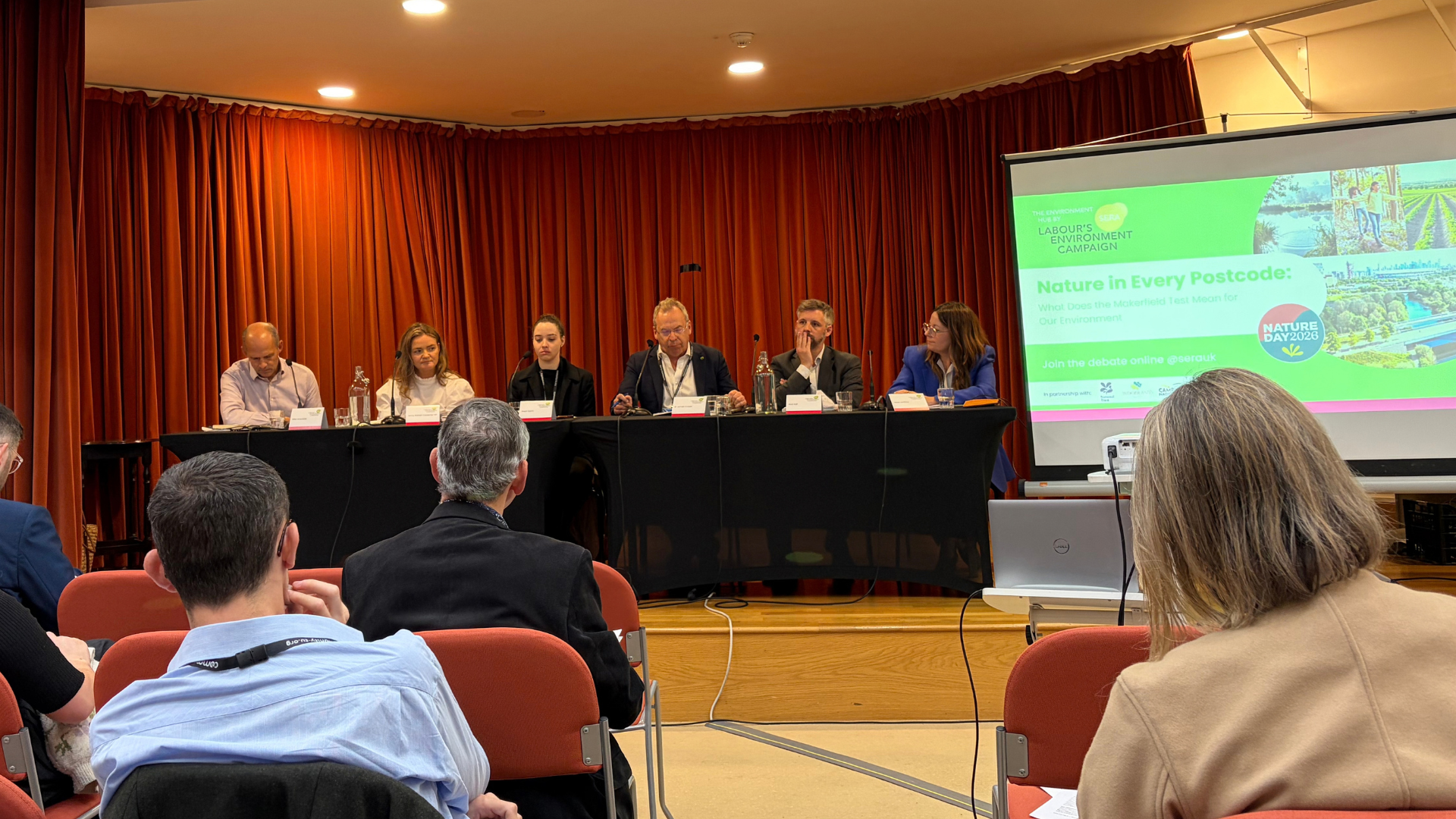
Away from the main stage, however, the picture felt remarkably different. The fringe was buzzing with conversations about climate, nature, energy, adaptation and resilience. More importantly, we saw a level of engagement from Ministers and backbench MPs on these issues that felt notably different from previous years. There was a real appetite to engage, not simply with the technicalities of policy, but with questions about how change lands in communities and how people can have a meaningful role in shaping it.
.png)
For Hope for the Future, that matters enormously. The transition cannot simply be something that is done to communities. If climate and nature policy is going to endure politically, people need agency within it and routes to influence the decisions affecting their homes, neighbourhoods and livelihoods.
And what about democracy?
Democracy presented an interesting contrast. There was plenty of activity around electoral reform, including the announcement of a national commission on the issue, but much less space dedicated to the broader question of democratic participation: how people experience democracy between elections, how they engage with political institutions and, ultimately, whether they feel they have meaningful influence over the decisions affecting their lives.
One event we were particularly pleased to attend was the Fabian Society and Transparency International UK's Whose Democracy Is It Anyway?, which explored declining political trust and the influence of money in politics. The starting point was sobering: just 4% of the public trust MPs to act in the national interest.
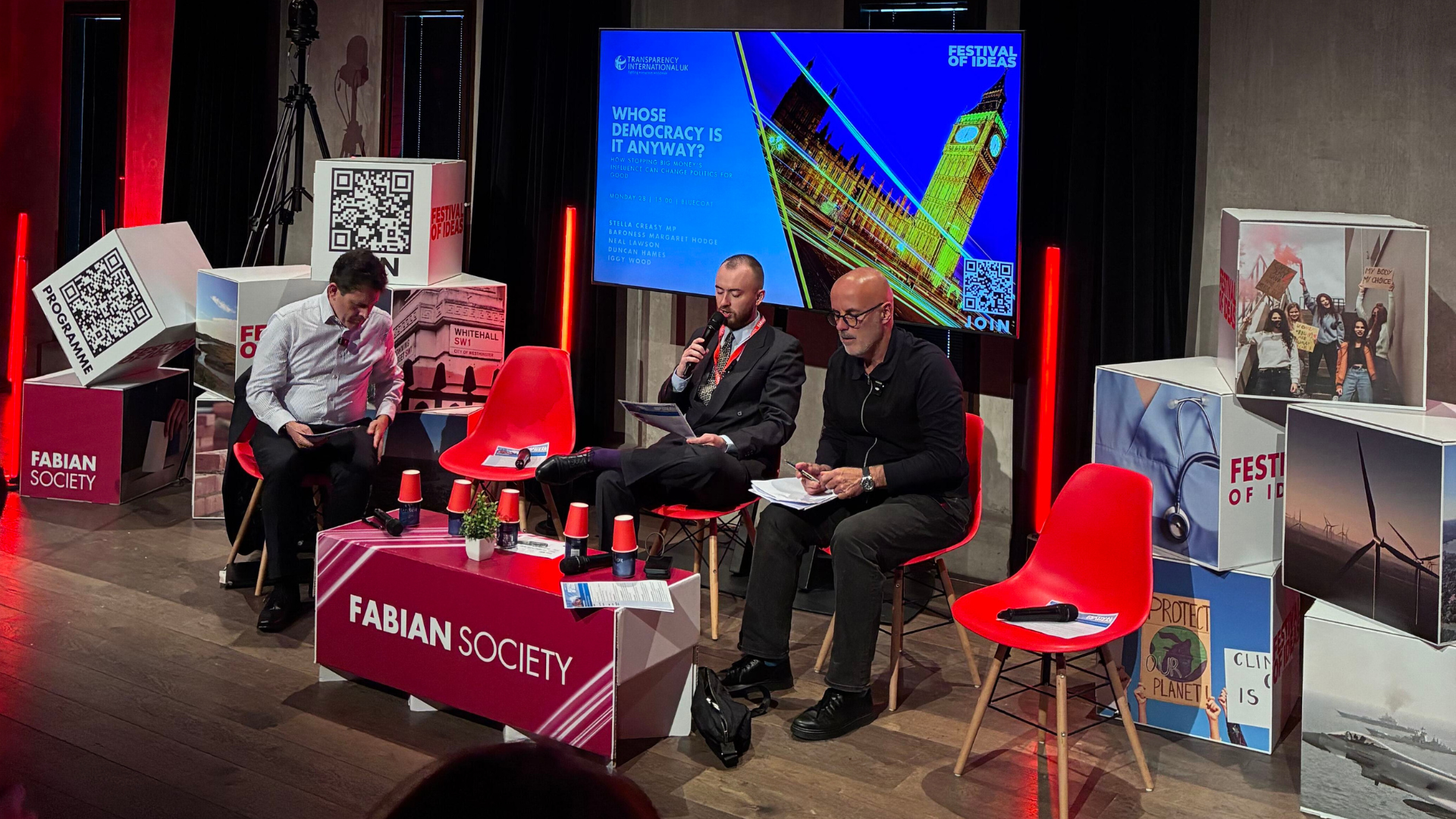
During the discussion, Joel posed a question that gets to the heart of our work at Hope for the Future:
"How do we get people falling in love with democracy again?".
Electoral reform can be part of the answer. But rebuilding people's relationship with democracy has to go further than changing its structures. It happens through people's everyday experiences of it: whether they feel heard; whether they can access decision-makers; whether taking part leads anywhere; and whether communities have meaningful power over the changes happening around them.
This is where we see an important connection between two conversations happening at the party conference - climate action and democratic renewal cannot afford to sit in separate rooms.
Taking the conversation directly to politicians
Conference also gave us an invaluable opportunity to spend time with MPs and other political leaders, and one of our most encouraging reflections was just how open, approachable and generous with their time politicians were. Compared with previous conferences, we found MPs particularly willing to stop, talk and engage with us and our partners.
That feels worth sharing. Politics can often appear inaccessible from the outside, but our experience in Liverpool reinforced something we tell the communities we support every day: politicians are people, and meaningful conversations with them are possible.
And, due to popular demand, we're bringing back the Hope for the Future political roadshow! We'll be sitting down with politicians to hear directly about their experience of politics: what it is really like to be an MP, what changes when you move between the backbenches and Government, what makes constituent engagement effective, and what they wish more people understood about influencing political decision-making.
Understanding politicians as people - the pressures they face, what motivates them and how they make decisions - has always been central to Hope for the Future's approach. We believe better political engagement is built through relationships, not simply louder demands.
Creating space for a different conversation
Finally, we hosted our own cross-sector conversation on climate adaptation and resilience. Rather than another panel presenting predetermined answers, we wanted to create space for an honest conversation about where the movement currently is: what is already happening, where coordination could be stronger, where the gaps lie, and what communities will need as the impacts of climate change become increasingly unavoidable.
The conversation reinforced something we heard repeatedly throughout the Conference: adaptation is rapidly moving from being a future policy challenge to a present-day political and community reality.
For us, the question is therefore not only how do we make communities more resilient? It is also who gets to shape what resilience looks like?
And the conversation won't end in Liverpool. We're planning a follow-up virtual discussion to continue exploring where greater coordination is needed across the climate adaptation and resilience space, and what role communities should play within it. If you're an organisation working on adaptation, resilience, climate justice or community power and would be interested in joining that conversation, we'd love to hear from you.
We left Liverpool encouraged by the appetite we saw among politicians and partners to engage with these questions. But we are also convinced that the next stage needs to go further.
The opportunity is not simply to deliver better climate and nature policy alongside stronger democracy. It is to recognise that the two depend upon one another: lasting climate and nature action will require communities to have genuine agency and power in shaping the transition.