



Reflecting on the Green Party Conference 2026
Earlier this month, the Green Party Conference took place at the Brighton Centre. Below, our Policy & Engagement Coordinator, Joe Gascoyne Thompson, briefly shares his insights from the three day event.
 Written by Joe Gascoyne Thompson, Policy & Engagement Coordinator
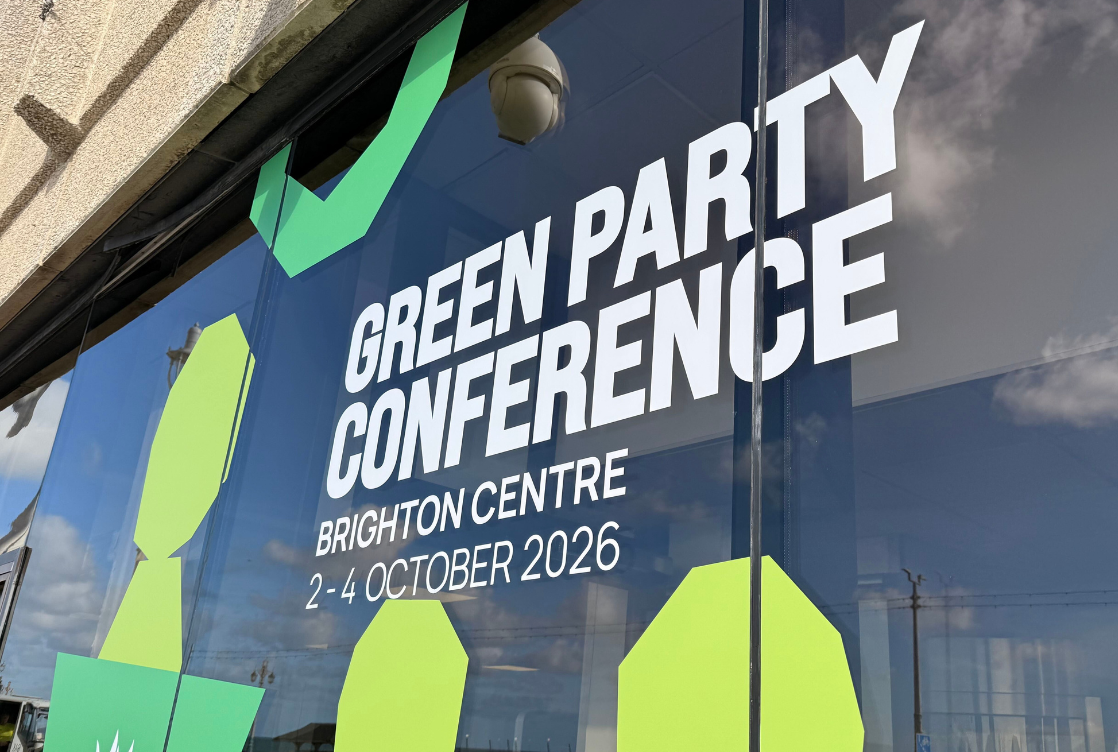
I attended the Green Party conference, from the 2nd - 4th of October, to learn more about the party’s vision for the year ahead, particularly its priorities for climate and nature, and how it sees its role in shaping the political debate.
Much of the media coverage since the conference has focused on some of its more controversial outcomes. While these discussions are important, it is equally important to highlight the developments and conversations around climate and nature. Beyond the headlines, there were several interesting discussions, which I’ve summarised below.
Pushing for climate action
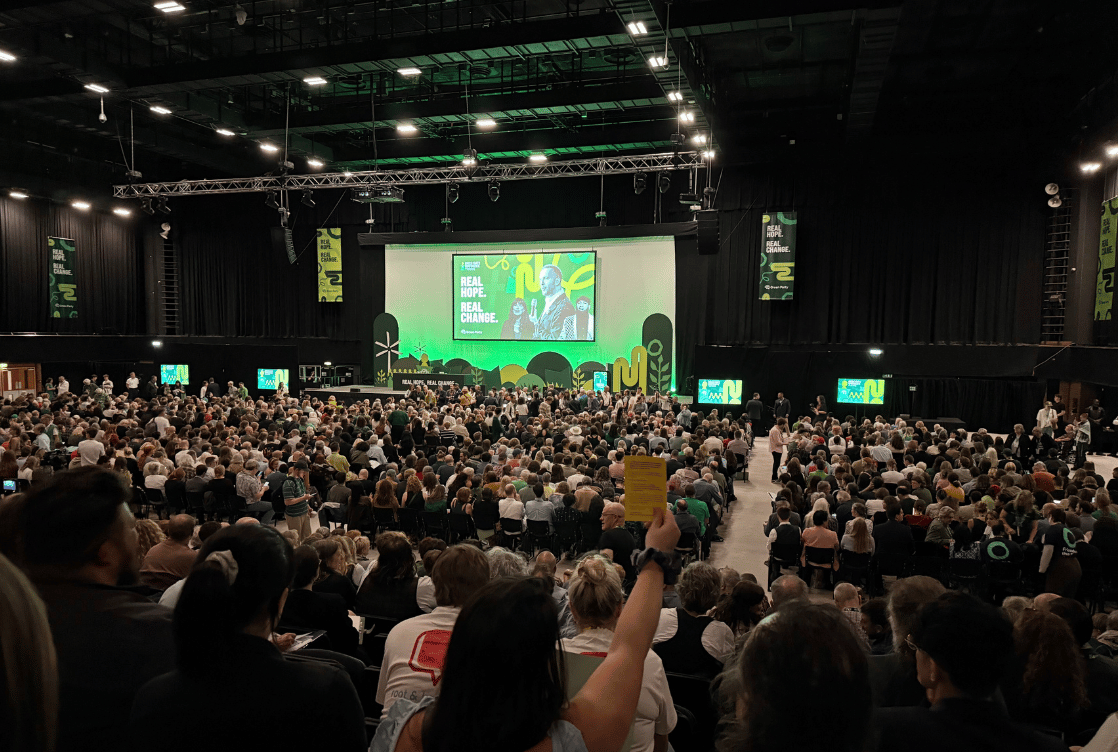
One of the clearest messages throughout the conference, from the leader’s speech to discussions across a range of panels, was that the Green Party sees its role as applying pressure on the current government from the left. In his speech, leader Zack Polanski summed this up with the phrase: “Vote Green, watch Labour move.”
This message carried through into conversations about where the party could push the government to go further. Discussions covered a range of issues, including improving climate adaptation policy, challenging anti-climate messaging, and ensuring a fair transition away from fossil fuels. While these issues present different challenges, they share a common question: how can political pressure be translated into more ambitious action on climate and nature?
The future of oil and gas in the North Sea
The leader’s speech also reiterated the Green Party’s call to end all new drilling for oil and gas in the North Sea. Polanski criticised the current government’s signals around the potential approval of the Rosebank and Jackdaw oil and gas projects, reinforcing the party’s opposition to further fossil fuel extraction.
This position reflects the Greens’ wider ambition to accelerate the transition towards a decarbonised economy. It also highlights the continuing political debate around how the UK should balance energy security, the transition away from fossil fuels, and the need to reduce emissions.
Giving nature a stronger voice in law
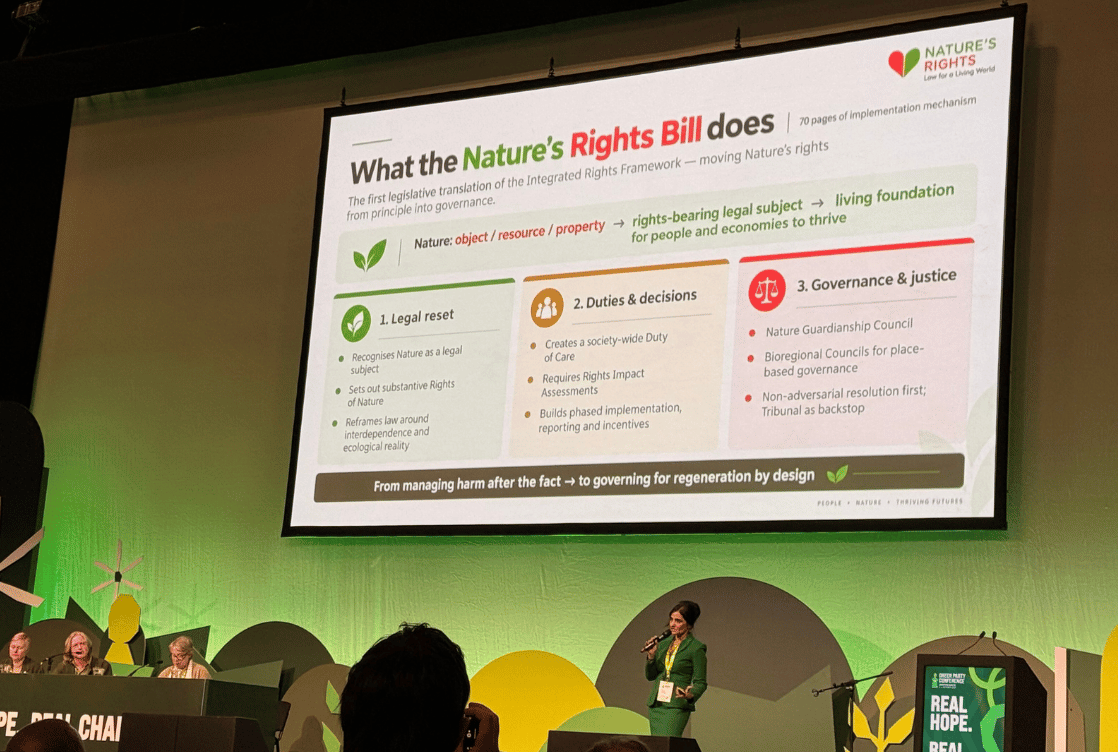
Nature’s place in the legal system was another topic of discussion. A panel featuring Nature Rights Bill author, Mumta Ito, and one of its parliamentary sponsors, Baroness Natalie Bennett, explored how the proposed legislation could change the way nature is recognised and protected under the law.
The Nature Rights Bill seeks to fundamentally change nature’s standing in law, creating new possibilities for how environmental protection is approached.
For climate and nature advocates, this could open up opportunities to push for more ambitious action and challenge decisions that harm the natural world. The discussion also raised broader questions about how we recognise the value of nature in political and legal decision-making. At a time when biodiversity loss and climate change continue to put pressure on ecosystems, exploring new approaches to environmental protection will be an important part of the wider conversation about how we secure a healthier future.
A shift in the Green Party’s position on nuclear power
Another significant development came when the Green Party passed a new policy motion on electricity generation, removing its blanket opposition to nuclear power.
The motion does not commit the party to supporting any particular nuclear project. However, it represents a notable shift in its approach to the technologies that could contribute to a decarbonised electricity grid.
This change could have wider implications for future discussions about the UK’s energy mix, particularly as policymakers consider how to deliver reliable, low-carbon electricity while meeting climate targets. It will be interesting to see how this revised position develops, and how the party approaches the role of nuclear power alongside renewable energy and other measures to reduce emissions.
Looking ahead
The conference offered a useful insight into how the Green Party sees its role in shaping the political debate over the coming year. Across discussions on fossil fuels, nature rights, climate adaptation and electricity generation, there was a clear emphasis on pushing for more ambitious action and challenging the direction of current government policy.

Green Party
Founded in 1973 and currently lead by Zack Polanski, the Green Party are a green and left wing political party.